Completion requirements
What is Carbon Monoxide?
Carbon Monoxide (CO) is a toxic, odorless, and colorless gas produced by the incomplete combustion of fuels such as natural gas, kerosene, coal, wood, propane, or oil.
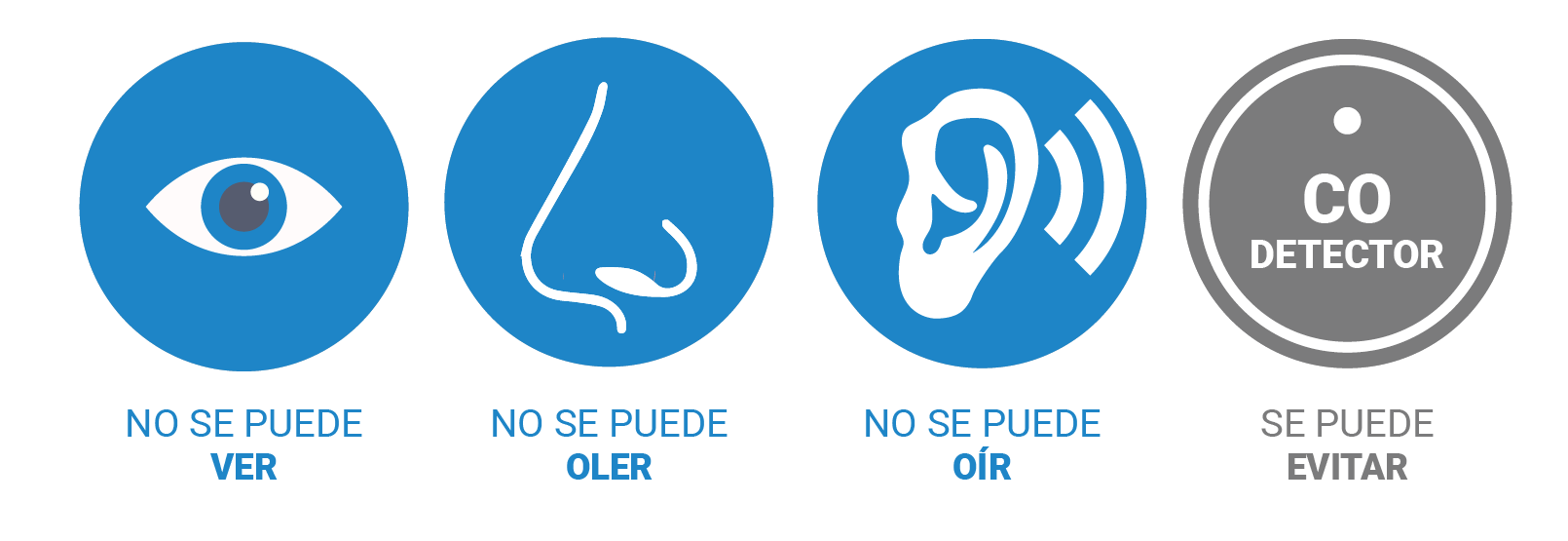
Because it cannot be seen, smelled, or heard, CO is extremely dangerous — but it can be prevented.
TRADUCIR
Where is CO produced?
CO can be produced by any combustion appliance that is not working correctly, including stoves, ovens, boilers, water heaters, space heaters, and fireplaces.
A key indicator of incomplete combustion is flame color:
🔵 Blue flame = normal combustion, normal CO levels
🟠 Yellow/orange flame = poor combustion, abnormal CO levels
How does CO affect health?
The health effects of CO depend on concentration, duration of exposure, and the individual's health condition. CO concentration is measured in parts per million (ppm).
| CO Level | Health Effects |
|---|---|
| 0–35 ppm | Low — no immediate effects |
| 35–100 ppm | Moderate — headaches, nausea, dizziness |
| +100 ppm | Dangerous — confusion, loss of consciousness |
| +400 ppm | Life-threatening — convulsions, death |
(Source: WHO, 2000)
What is chronic CO poisoning?
Chronic poisoning occurs when people are exposed to low levels of CO over a long period of time — for example, living in a home with a poorly functioning combustion appliance and inadequate ventilation.
Symptoms of chronic exposure can resemble the flu: headaches, fatigue, muscle pain, nausea, and drowsiness. Because these symptoms differ from acute poisoning, chronic CO exposure is often misdiagnosed as stress, infections, or allergies.
How is CO measured and monitored?
There is an important difference between measuring and monitoring CO:
- Measuring:done with a CO detector at a specific moment. The detector is placed approximately 30 cm above each combustion appliance, with doors and windows closed.
- Monitoring: done with CO dataloggers installed in the home over several days. This provides a more representative picture of CO levels during normal household activity.
Monitoring is recommended whenever:
- Family members show symptoms of poisoning (headaches, nausea, tremors)
- The home uses a stove, oven, or unvented heater for heating
- CO readings during assessment are above 0 ppm
Types of combustion appliances and ventilation
The type of ventilation system in a heating appliance directly affects CO risk:
- Unvented heater: burns indoor oxygen and releases combustion gases indoors. High risk.
- Natural draft heater: burns indoor oxygen but vents gases outside. Medium risk.
- Balanced flue heater: draws air from outside and vents gases outside. Best option.
When replacement is not possible, installing ventilation grilles is essential to ensure adequate air renewal.
What to do if high CO levels are detected?
Immediate actions:
- Open all doors and windows to allow fresh air in
- Turn off all combustion appliances
- Leave the home immediately and breathe fresh air
Follow-up actions:
- Take focused measurements to locate the CO source
- Shut down the appliance generating CO
- Call a certified gas technician to repair or replace it
- Refer the family to a medical center for a carboxyhemoglobin (COHb) blood test
Safe habits to prevent CO at home
- Never use a gas oven or stove to heat your home
- Never run a car engine inside a garage
- Never use charcoal indoors, even in a fireplace
- Always allow fresh air into the home
- Never leave a gas or kerosene heater on while sleeping unless it is vented to the outside
Next step: Continue to B. Particulate Matter (PM)