Completion requirements
The building envelope: what is it and why does it matter?
The building envelope is everything that separates the interior of a home from the exterior — walls, floors, roof, windows, and doors. Its function is not just technical: it protects people from extreme weather, ensures thermal comfort, reduces energy use, and prevents health problems related to humidity, cold, and heat.
When the envelope fails, it's not just the building that deteriorates — it's the quality of life of the people living in it. Families in poorly insulated homes spend more on heating and cooling, are more exposed to respiratory illnesses, and face greater thermal stress. For lower-income households, this represents a direct economic burden.
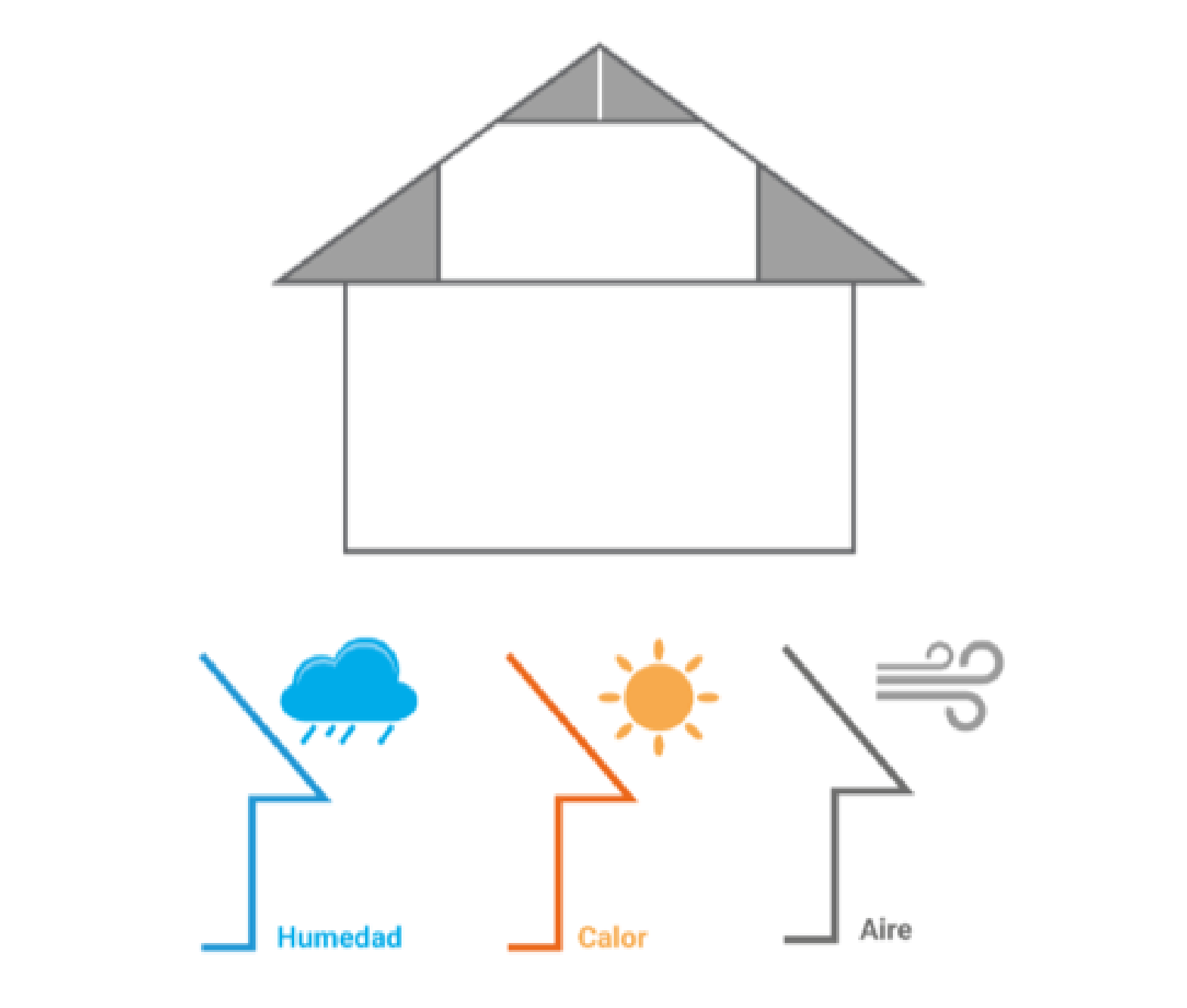
A well-performing building envelope must function as three things simultaneously:
- Thermal insulation: controlling heat transfer
- Moisture barrier: controlling water and vapor
- Air barrier: controlling air infiltration
TRADUCIR
1. Thermal Insulation - Controlling Heat Transfer
Buildings gain and lose heat constantly. Understanding how heat moves through a building is essential to improving its performance.
Heat transfer happens in three ways:
- Radiation: solar energy passing through windows and heating surfaces. In summer, we want to block it; in winter, we want to use it for natural heating. Dark colors absorb more heat; light colors reflect it. Standard 3mm glass allows 85% of solar radiation to pass through.
- Conduction: heat moving through solid materials. Two factors determine how much: the material's thermal conductivity (λ) and its thickness. The thermal resistance of a material is R = e/λ (thickness divided by conductivity).
- Convection: heat carried by moving air. Hot air rises and accumulates near the ceiling, so good insulation in the roof is especially important.
Heat Transfer in the Home
TRADUCIR
Thermal transmittance (K value)
The K value (also called U value) measures how much heat passes through a building component per unit of time and surface area. It is the inverse of total thermal resistance:
K = 1/Rt
Where: Rt = Rsi + R1 + R2 + R3 + Rse
A lower K value means better insulation — less heat is lost or gained through that element.
Thermal conductivity of materials scale
TRADUCIR
Common insulation materials:
| Material | Thermal Conductivity λ |
|---|---|
| EPS (expanded polystyrene) | 0.035 W/(m·K) |
| Glass wool | 0.03–0.04 W/(m·K) |
| Rock wool | 0.03–0.04 W/(m·K) |
| Polyurethane foam | 0.022 W/(m·K) |
| Projected cellulose | 0.036 W/(m·K) |
💡 Remember: It is much more effective and less costly to add an insulating layer than to simply increase wall thickness.
TRADUCIR
2. Moisture Control - Waterproofing and Vapor Barrier
Moisture in a home is not just a construction defect, it is a public health issue and a social inequality indicator. People living in precarious housing are more exposed to mold, fungi, and bacteria linked to moisture problems.
Moisture can enter a home in three ways:
- Infiltration: through cracks in the envelope, broken or poorly sealed pipes, joints between materials, or missing waterproofing. Can be sealed with cement mix, membrane, polyurethane foam, or silicone.
- Condensation: occurs when warm, humid indoor air meets a cold surface (wall or ceiling in contact with the exterior) that is below the dew point. Most common in winter. Prevented by combining thermal insulation with a vapor barrier — always placed on the warmest side of the wall or roof.
- Capillarity: ground moisture absorbed upward through porous foundation materials. Visible as moisture stains on lower sections of walls. Prevented with a horizontal waterproofing layer in the foundation.
Comfort humidity level = 40% – 60%
TRADUCIR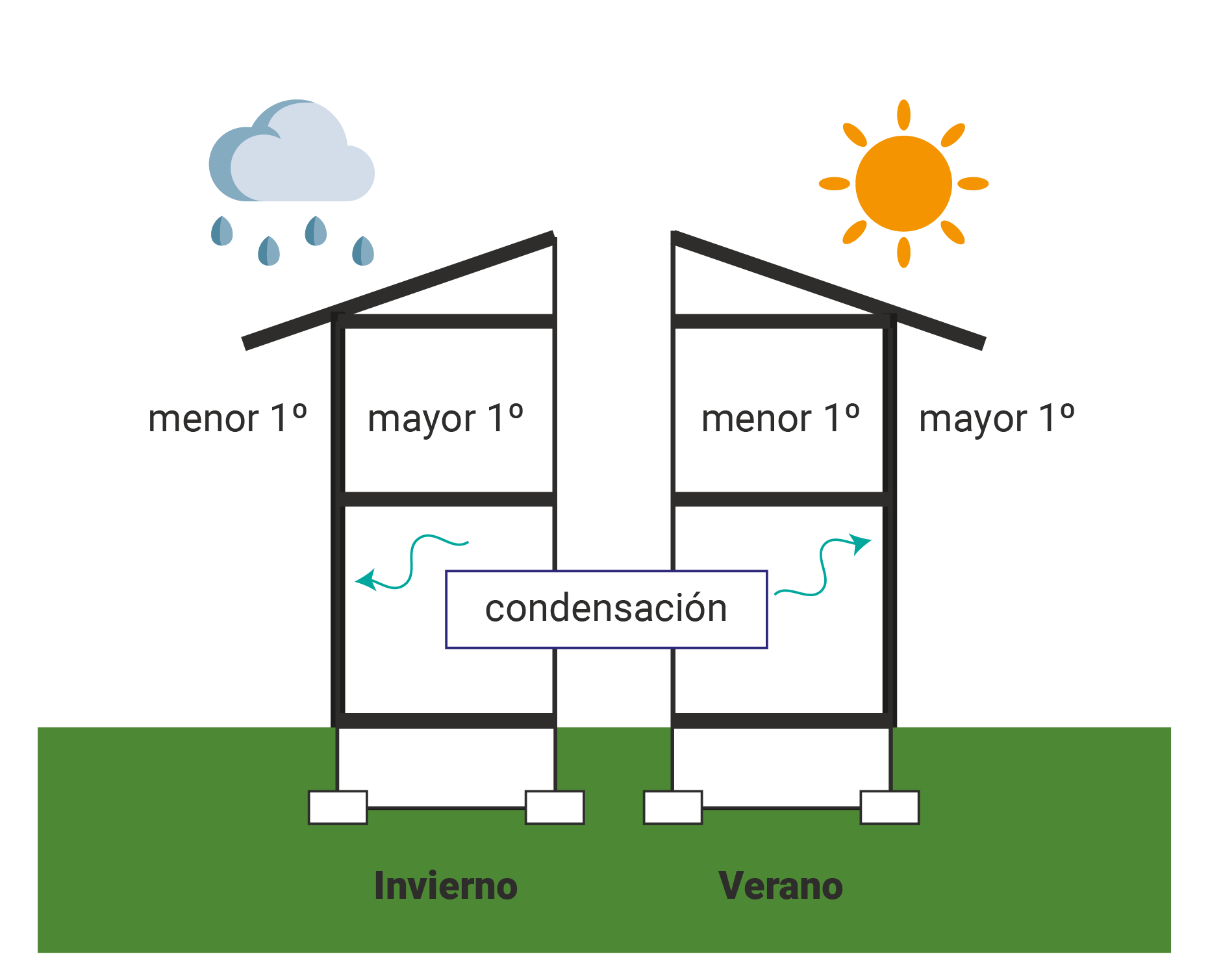
The vapor barrier is always placed on the warmest side of the wall or roof.
TRADUCIR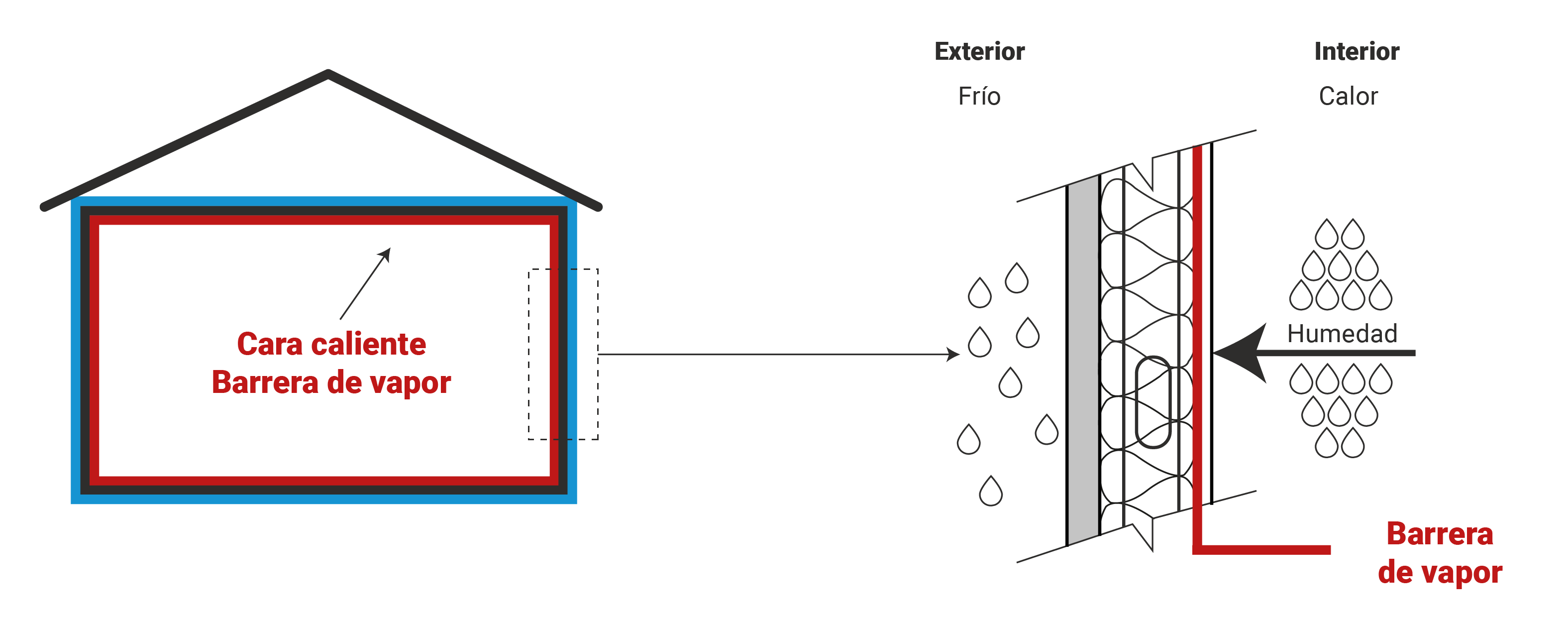
3. Air Leakage and Airtightness
When a home is built, materials must be joined and assembled. At every junction -wall-to-roof, wall-to-floor, window frames, electrical outlets- there is potential for air infiltration. These gaps allow cold or hot air to enter uncontrolled, carrying temperature, moisture, and pollutants.
Common air leakage points:
- Doors and windows: sealed with weatherstripping (rubber or foam profiles)
- Wall cracks: sealed with polyurethane foam or cement mix
- Roller shutter boxes: insulated and sealed at joints
- Wall-to-roof junctions: sealed with polyurethane foam
Where does air leak in?
TRADUCIR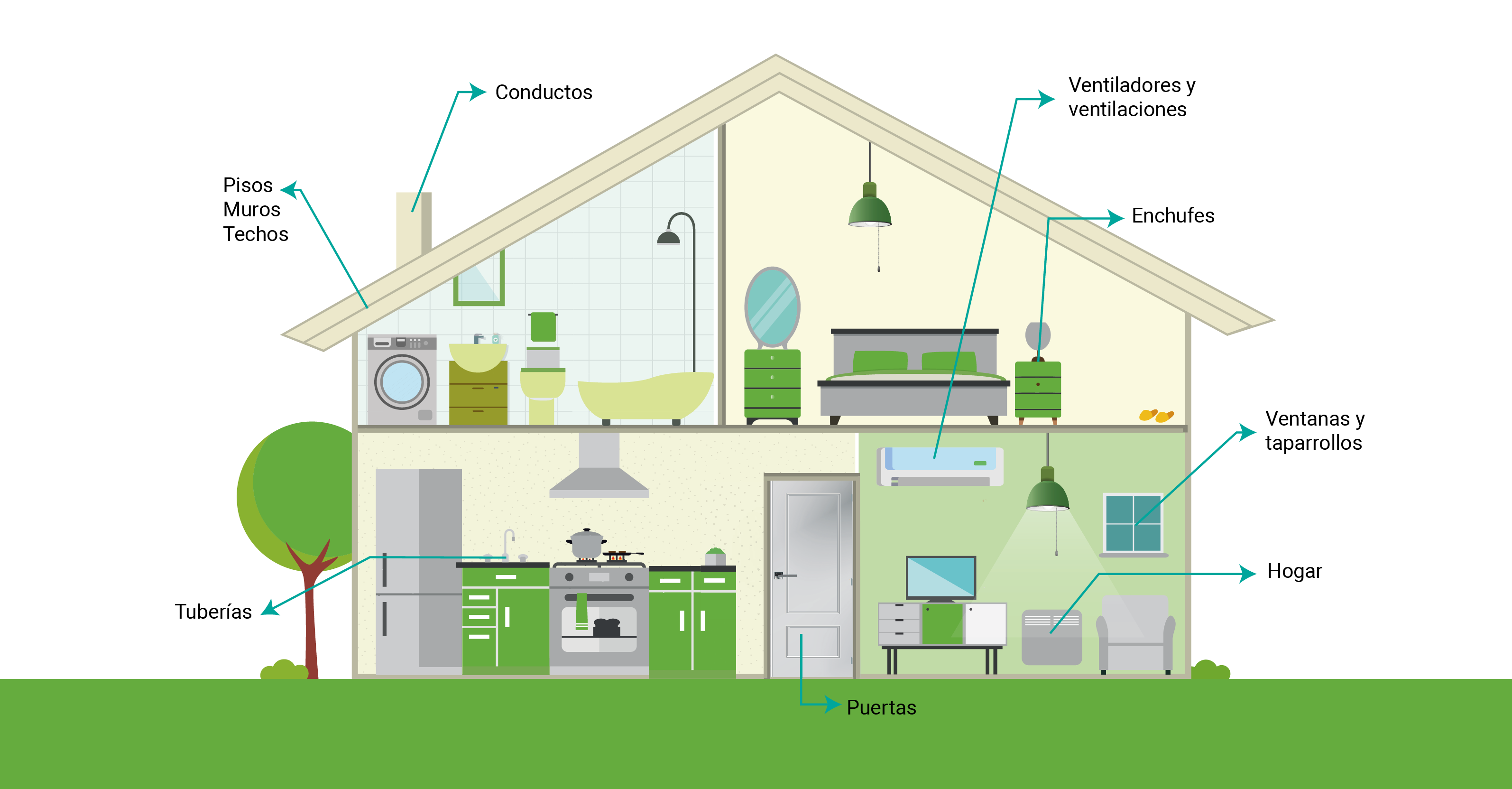
Diagnostic tool: The Blower Door / Infiltrometry Test measures the total air infiltration and exfiltration of a home. Combined with a thermal camera, it allows precise identification of where leaks are occurring.
TRADUCIR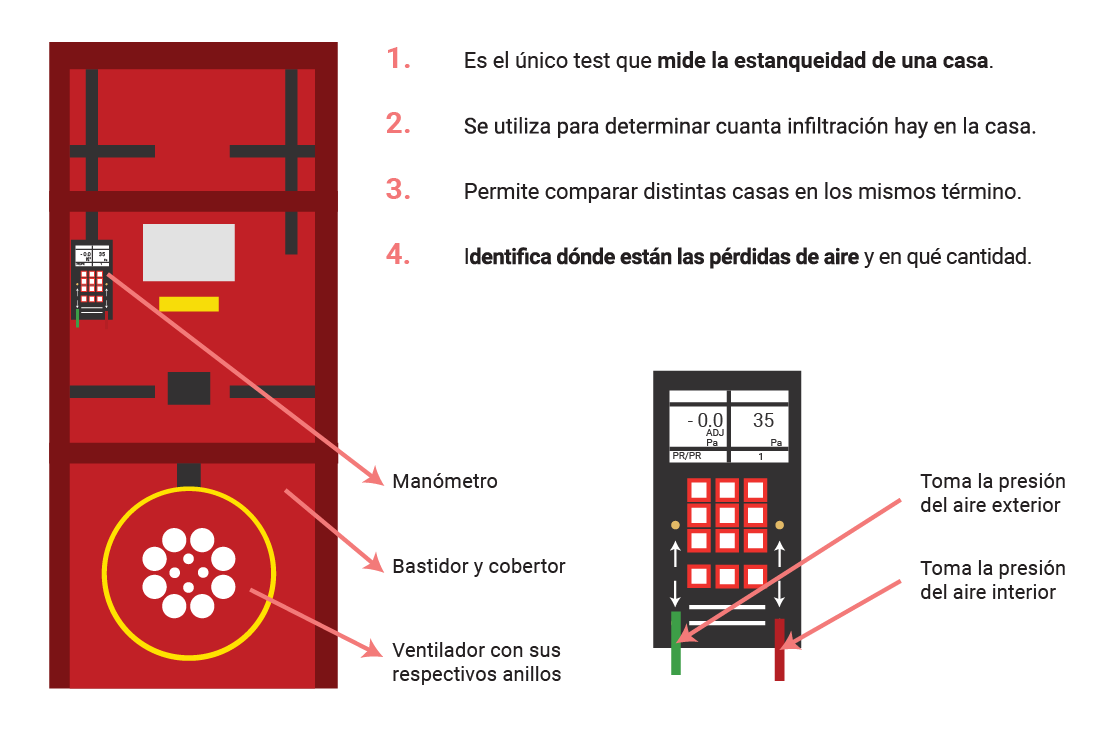
TRADUCIR